
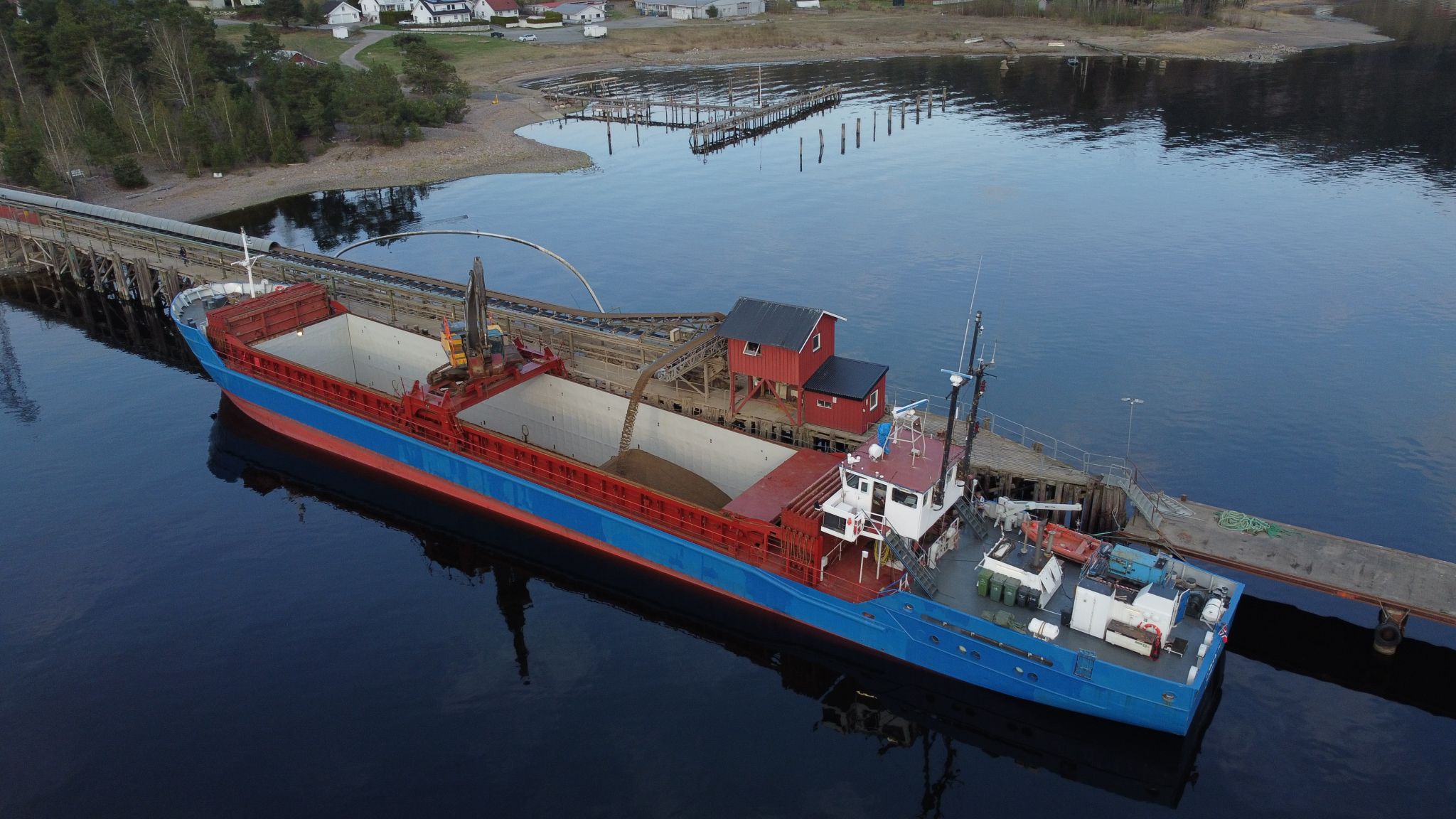
Reference project
MS Canoline. 8.4 MWh battery, hybrid.
A self-discharging coastal bulk carrier with a hybrid power system: electric propulsion and an 8.4 MWh battery, with a diesel engine retained for redundancy. Complete system delivered by MHS. Completion autumn 2026.
At a glance.
Self-discharging bulk carrier
Coastal cargo operations with integrated self-discharging equipment.
Hybrid electric
Electric propulsion with an 8.4 MWh battery, and a diesel engine kept for redundancy. Shore charging at port.
Autumn 2026
Under installation. Full system commissioning and sea trials.
Scope of supply.
MHS delivers the complete system.
| System | Description |
|---|---|
| Electric propulsion | Motor drives and DC power distribution |
| Shaft generator | Generator on the propeller shaft line |
| Transformers | 1,000 kVA + 150 kVA |
| Gearbox & propeller shaft | Dual-ratio gearbox, 5:1 / 6.57:1, with extended shaft |
| Controllable-pitch propeller | Ø2,000 mm, with bridge and engine-room control |
| Automation & monitoring | Alarm & monitoring (AMS) and power & energy management (PEMS) |
| Onboard charging | Shore-charging connection, 2×350 A + 1×125 A |
Hardware partner
MHS collaborates with WE Tech Solutions on power-electronics hardware.

Get in touch
Considering a power system for your vessel?
Talk to an engineer about your vessel, or explore our hybrid power solutions.