
One vessel model, from design through operation.
The onshore platform in MIIRA Cloud. A physics-based model of your vessel, used for simulation, energy analysis and fleet-wide insight from your computer.
One model, several applications.
MIIRA Cloud hosts applications built on the same physics-based vessel model. The model travels from design into operation, with no integration project between the two.
- Physics-based vessel model and Single Line Diagram
- Simulation across operational scenarios
- Energy KPIs and shareable reports
- Compare component sizings and configurations
- Fleet and performance analysis for technical operation onshore
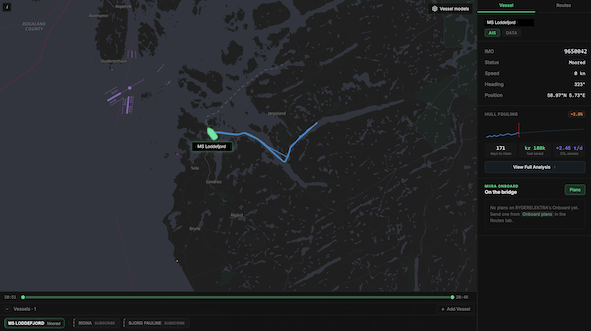
- Live fleet map and vessel registry
- Operational monitoring across the fleet
- Fuel, emissions, CII and ETS exposure
- Hull cleaning optimisation
What it covers
- Vessel model, SLD and configuration matrixModel
- Simulation across sailing profilesAnalysis
- Energy KPIs and shareable reportsReporting
- Live fleet map and vessel registryFleet
- Fuel, emissions, CII and ETS exposureRegulatory
Fleet performance, explained.
MIIRA Fleet connects vessel managers and crews around one physics-based model of each vessel. Where earlier data platforms leave you digging through graphs for a signal, Fleet pairs the model with operational data to track, isolate and visualise how a vessel actually performs.
Fuel use on offshore vessels varies widely from one shift to the next. Bus-tie configuration, the number of online generators and transit speed are all levers the crew controls. Fleet isolates the effect of those choices and measures them against the fuel-optimal scenario from the model. We call the difference the Crew Factor.
Genset running hours and battery discharge cycles ride on the same decisions as the fuel bill. Fleet combines the simulation engine with historical operation to predict when each vessel reaches its maintenance intervals. Where a vessel also runs MIIRA Onboard, managers can set vessel-specific targets that shape the advice the crew receives.
Connect Fleet to third-party data collectors or to MIIRA Onboard for cybersecure, high-frequency data. Track the metrics behind ESG reporting, DCS and MRV, and improve them year over year. With the simulation engine, you can also predict how a change in operation will move those KPIs before you commit.
Using each vessel's model, Fleet runs what-if scenarios. Define a custom route or pull one from an AIS track, add expected weather, and see how the vessel performs. Reschedule a ferry, weigh the return on shore charging, or try a new concept on a known operation before a newbuilding programme.
Marine growth adds resistance and fuel cost, faster in warm water and when a vessel sits still. Cleaning restores performance, but how often? With data collection, Fleet builds a data-driven hydrodynamic model of the hull that sharpens with every cleaning, so each estimate of the next optimal window beats the last.
See your vessel's model in MIIRA Cloud.
A physics-based model of your vessel, onshore, for simulation, energy analysis and fleet-wide insight.